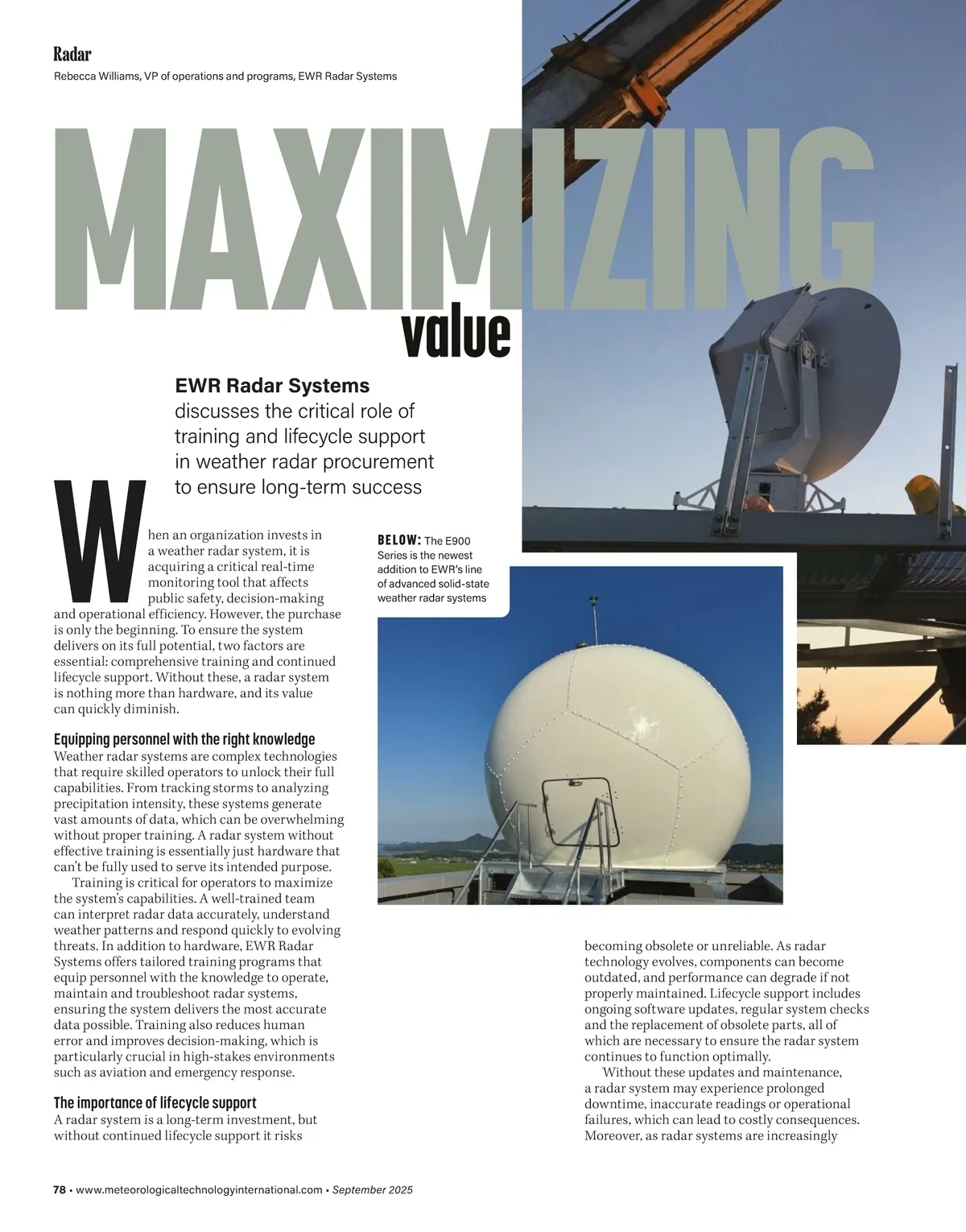
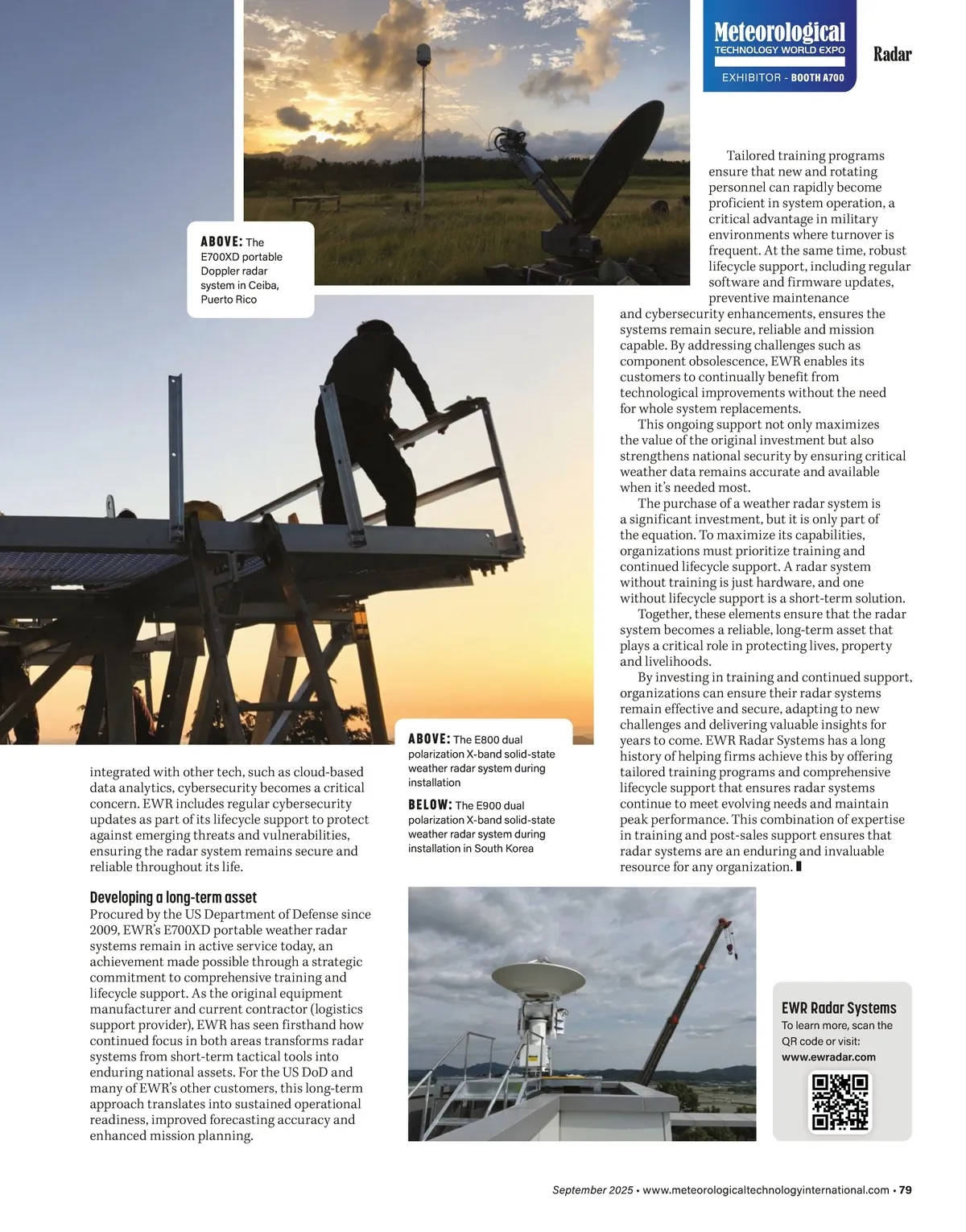
Radar MAXIMIZING W EWR Radar Systems discusses the critical role of training and lifecycle support in weather radar procurement to ensure long-term success Rebecca Williams, VP of operations and programs, EWR Radar Systems value hen an organization invests in a weather radar system, it is acquiring a critical real-time monitoring tool that affects public safety, decision-making and operational efficiency. However, the purchase is only the beginning. To ensure the system delivers on its full potential, two factors are essential: comprehensive training and continued lifecycle support. Without these, a radar system is nothing more than hardware, and its value can quickly diminish. BELOW: The E900 Series is the newest addition to EWR’s line of advanced solid-state weather radar systems Equipping personnel with the right knowledge Weather radar systems are complex technologies that require skilled operators to unlock their full capabilities. From tracking storms to analyzing precipitation intensity, these systems generate vast amounts of data, which can be overwhelming without proper training. A radar system without effective training is essentially just hardware that can’t be fully used to serve its intended purpose. Training is critical for operators to maximize the system’s capabilities. A well-trained team can interpret radar data accurately, understand weather patterns and respond quickly to evolving threats. In addition to hardware, EWR Radar Systems offers tailored training programs that equip personnel with the knowledge to operate, maintain and troubleshoot radar systems, ensuring the system delivers the most accurate data possible. Training also reduces human error and improves decision-making, which is particularly crucial in high-stakes environments such as aviation and emergency response. The importance of lifecycle support A radar system is a long-term investment, but without continued lifecycle support it risks becoming obsolete or unreliable. As radar technology evolves, components can become outdated, and performance can degrade if not properly maintained. Lifecycle support includes ongoing software updates, regular system checks and the replacement of obsolete parts, all of which are necessary to ensure the radar system continues to function optimally. Without these updates and maintenance, a radar system may experience prolonged downtime, inaccurate readings or operational failures, which can lead to costly consequences. Moreover, as radar systems are increasingly 78 • www.meteorologicaltechnologyinternational.com • September 2025
Meteorological Technology International Meteorological Technology International September 2025 Issue: Page 78